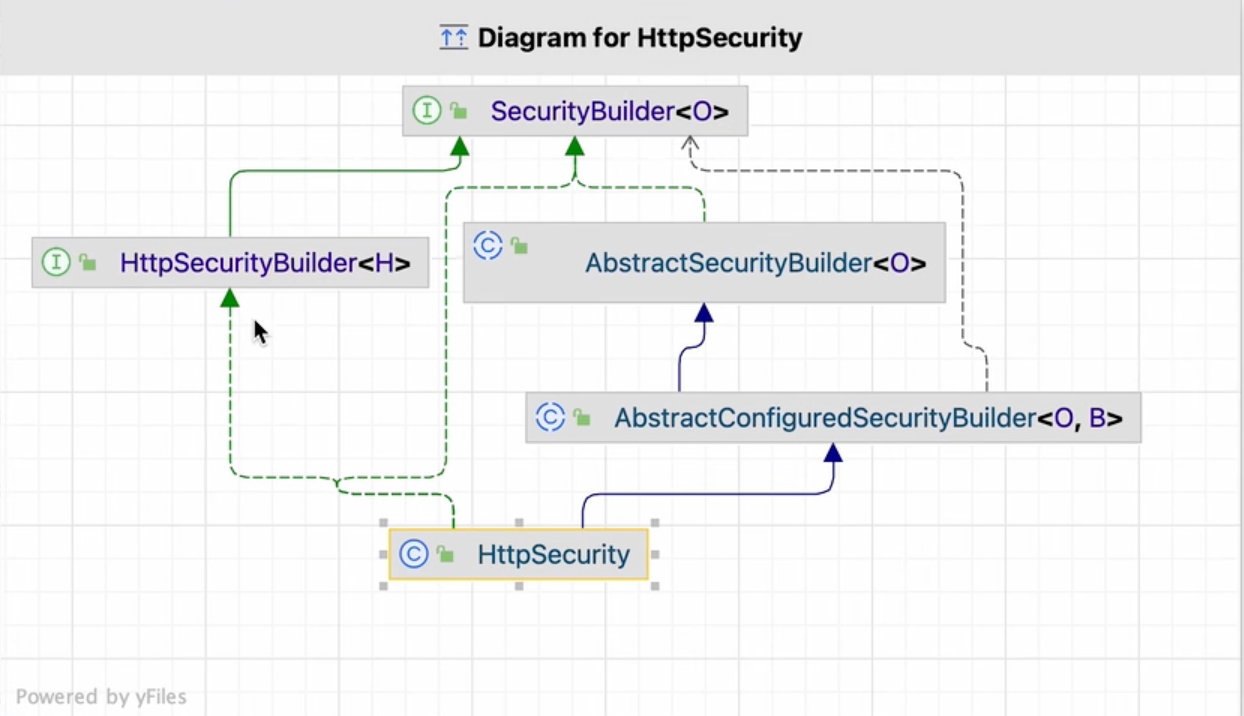
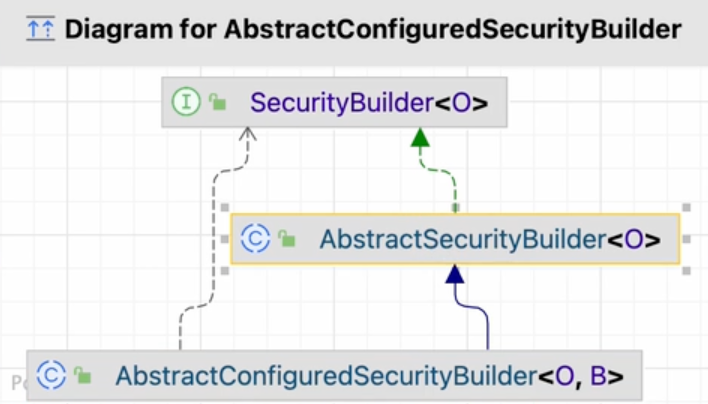
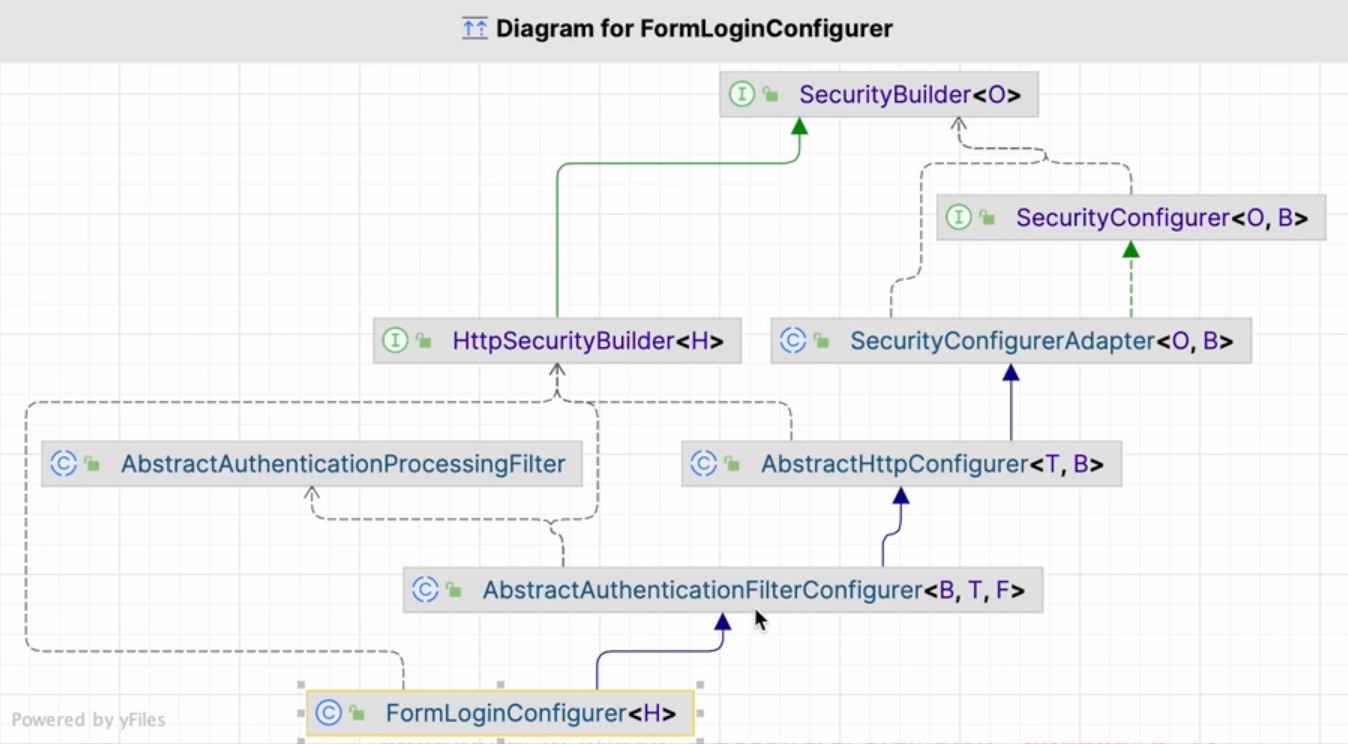
public interface SecurityBuilder<O> {
	O build() throws Exception;
}
HttpSecurity
public final class HttpSecurity
	extends AbstractConfiguredSecurityBuilder<DefaultSecurityFilterChain, HttpSecurity>
	implements SecurityBuilder<DefaultSecurityFilterChain>,HttpSecurityBuilder<HttpSecurity>{}
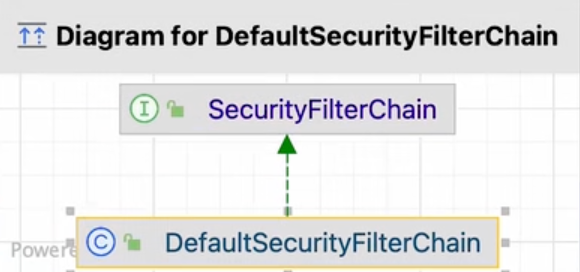
public final class DefaultSecurityFilterChain implements SecurityFilterChain {

    private static final Log logger = LogFactory.getLog(DefaultSecurityFilterChain.class);

    private final RequestMatcher requestMatcher;

    private final List<Filter> filters;

    public DefaultSecurityFilterChain(RequestMatcher requestMatcher, Filter... filters) {
       this(requestMatcher, Arrays.asList(filters));
    }

    public DefaultSecurityFilterChain(RequestMatcher requestMatcher, List<Filter> filters) {
       if (filters.isEmpty()) {
          logger.info(LogMessage.format("Will not secure %s", requestMatcher));
       }
       else {
          logger.info(LogMessage.format("Will secure %s with %s", requestMatcher, filters));
       }
       this.requestMatcher = requestMatcher;
       this.filters = new ArrayList<>(filters);
    }

    public RequestMatcher getRequestMatcher() {
       return this.requestMatcher;
    }

    @Override
    public List<Filter> getFilters() {
       return this.filters;
    }

    @Override
    public boolean matches(HttpServletRequest request) {  //匹配成功就会应用filters里的过滤器
       return this.requestMatcher.matches(request);
    }

    @Override
    public String toString() {
       return this.getClass().getSimpleName() + " [RequestMatcher=" + this.requestMatcher + ", Filters=" + this.filters
             + "]";
    }

}
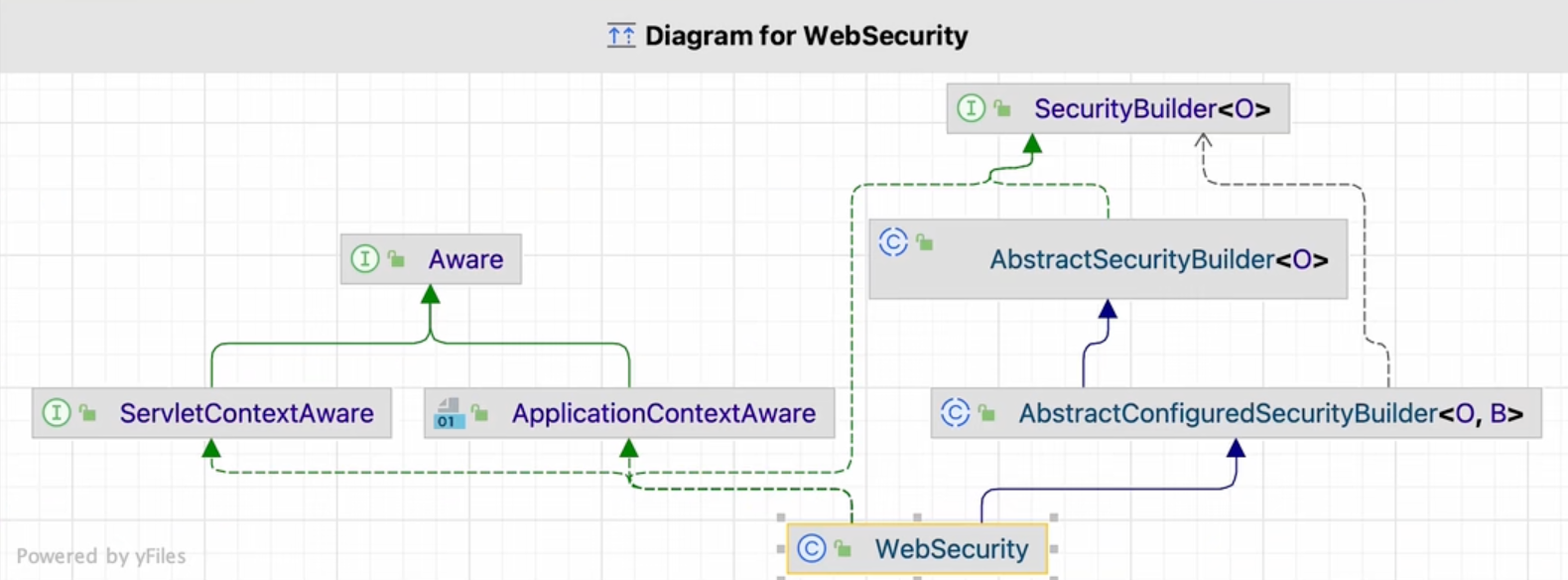
WebSecurity
public final class WebSecurity
	extends AbstractConfiguredSecurityBuilder<Filter, WebSecurity>
	implements SecurityBuilder<Filter>, ApplicationContextAware, ServletContextAware {}
protected Filter performBuild() throws Exception {
    Assert.state(!this.securityFilterChainBuilders.isEmpty(),
          () -> "At least one SecurityBuilder<? extends SecurityFilterChain> needs to be specified. "
                + "Typically this is done by exposing a SecurityFilterChain bean. "
                + "More advanced users can invoke " + WebSecurity.class.getSimpleName()
                + ".addSecurityFilterChainBuilder directly");
    int chainSize = this.ignoredRequests.size() + this.securityFilterChainBuilders.size();
    List<SecurityFilterChain> securityFilterChains = new ArrayList<>(chainSize);
    List<RequestMatcherEntry<List<WebInvocationPrivilegeEvaluator>>> requestMatcherPrivilegeEvaluatorsEntries = new ArrayList<>();
    for (RequestMatcher ignoredRequest : this.ignoredRequests) {
       WebSecurity.this.logger.warn("You are asking Spring Security to ignore " + ignoredRequest
             + ". This is not recommended -- please use permitAll via HttpSecurity#authorizeHttpRequests instead.");
       SecurityFilterChain securityFilterChain = new DefaultSecurityFilterChain(ignoredRequest);
       securityFilterChains.add(securityFilterChain);
       requestMatcherPrivilegeEvaluatorsEntries
          .add(getRequestMatcherPrivilegeEvaluatorsEntry(securityFilterChain));
    }
    for (SecurityBuilder<? extends SecurityFilterChain> securityFilterChainBuilder : this.securityFilterChainBuilders) {
       SecurityFilterChain securityFilterChain = securityFilterChainBuilder.build();
       securityFilterChains.add(securityFilterChain);
       requestMatcherPrivilegeEvaluatorsEntries
          .add(getRequestMatcherPrivilegeEvaluatorsEntry(securityFilterChain));
    }
    if (this.privilegeEvaluator == null) {
       this.privilegeEvaluator = new RequestMatcherDelegatingWebInvocationPrivilegeEvaluator(
             requestMatcherPrivilegeEvaluatorsEntries);
    }
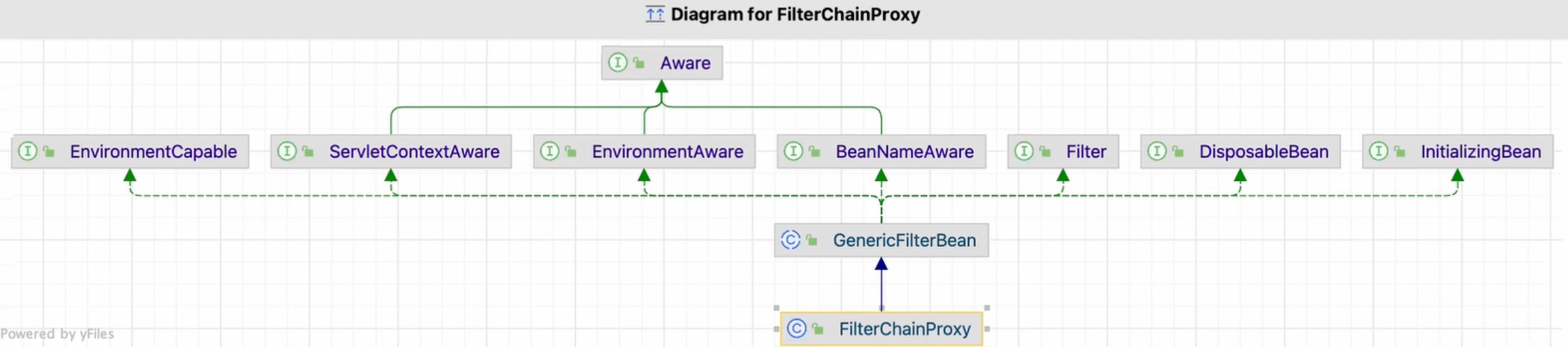
    FilterChainProxy filterChainProxy = new FilterChainProxy(securityFilterChains);
    if (this.httpFirewall != null) {
       filterChainProxy.setFirewall(this.httpFirewall);
    }
    if (this.requestRejectedHandler != null) {
       filterChainProxy.setRequestRejectedHandler(this.requestRejectedHandler);
    }
    else if (!this.observationRegistry.isNoop()) {
       CompositeRequestRejectedHandler requestRejectedHandler = new CompositeRequestRejectedHandler(
             new ObservationMarkingRequestRejectedHandler(this.observationRegistry),
             new HttpStatusRequestRejectedHandler());
       filterChainProxy.setRequestRejectedHandler(requestRejectedHandler);
    }
    filterChainProxy.setFilterChainDecorator(getFilterChainDecorator());
    filterChainProxy.afterPropertiesSet();

    Filter result = filterChainProxy;
    if (this.debugEnabled) {
       this.logger.warn("\n\n" + "********************************************************************\n"
             + "**********        Security debugging is enabled.       *************\n"
             + "**********    This may include sensitive information.  *************\n"
             + "**********      Do not use in a production system!     *************\n"
             + "********************************************************************\n\n");
       result = new DebugFilter(filterChainProxy);
    }

    this.postBuildAction.run();
    return result;
}
/**
 * Allows for configuring a {@link SecurityBuilder}. All {@link SecurityConfigurer} first
 * have their {@link #init(SecurityBuilder)} method invoked. After all
 * {@link #init(SecurityBuilder)} methods have been invoked, each
 * {@link #configure(SecurityBuilder)} method is invoked.
 * //必须先调用init再调用configure
 * * @param <O> The object being built by the {@link SecurityBuilder} B
 * @param <B> The {@link SecurityBuilder} that builds objects of type O. This is also the
 * {@link SecurityBuilder} that is being configured.
 * @author Rob Winch * @see AbstractConfiguredSecurityBuilder
 */
public interface SecurityConfigurer<O, B extends SecurityBuilder<O>> {

    /**
     * Initialize the {@link SecurityBuilder}. Here only shared state should be created
     * and modified, but not properties on the {@link SecurityBuilder} used for building
     * the object. This ensures that the {@link #configure(SecurityBuilder)} method uses
     * the correct shared objects when building. Configurers should be applied here.     * @param builder
     * @throws Exception
     */
    void init(B builder) throws Exception;

    /**
     * Configure the {@link SecurityBuilder} by setting the necessary properties on the
     * {@link SecurityBuilder}.
     * @param builder
     * @throws Exception
     */
    void configure(B builder) throws Exception;

}
private enum BuildState {

    /**
     * This is the state before the {@link Builder#build()} is invoked     */    UNBUILT(0),

    /**
     * The state from when {@link Builder#build()} is first invoked until all the     * {@link SecurityConfigurer#init(SecurityBuilder)} methods have been invoked.
     */    INITIALIZING(1),

    /**
     * The state from after all {@link SecurityConfigurer#init(SecurityBuilder)} have
     * been invoked until after all the     * {@link SecurityConfigurer#configure(SecurityBuilder)} methods have been
     * invoked.     */    CONFIGURING(2),

    /**
     * From the point after all the     * {@link SecurityConfigurer#configure(SecurityBuilder)} have completed to just
     * after {@link AbstractConfiguredSecurityBuilder#performBuild()}.
     */    BUILDING(3),

    /**
     * After the object has been completely built.     */    BUILT(4);

    private final int order;

    BuildState(int order) {
       this.order = order;
    }

    public boolean isInitializing() {
       return INITIALIZING.order == this.order;
    }

    /**
     * Determines if the state is CONFIGURING or later     * @return     */    public boolean isConfigured() {
       return this.order >= CONFIGURING.order;
    }

}
HttpSecurity
7️⃣HttpSecurity对performBuild()方法的实现
@Override
protected DefaultSecurityFilterChain performBuild() {
    ExpressionUrlAuthorizationConfigurer<?> expressionConfigurer = getConfigurer(
          ExpressionUrlAuthorizationConfigurer.class);
    AuthorizeHttpRequestsConfigurer<?> httpConfigurer = getConfigurer(AuthorizeHttpRequestsConfigurer.class);
    boolean oneConfigurerPresent = expressionConfigurer == null ^ httpConfigurer == null;

	 //该判断的含义:expressionConfigurer和httpConfigurer只能配置一个
    Assert.state((expressionConfigurer == null && httpConfigurer == null) || oneConfigurerPresent,
          "authorizeHttpRequests cannot be used in conjunction with authorizeRequests. Please select just one.");
    this.filters.sort(OrderComparator.INSTANCE);
    List<Filter> sortedFilters = new ArrayList<>(this.filters.size());
    for (Filter filter : this.filters) {
       sortedFilters.add(((OrderedFilter) filter).filter);
    }
    return new DefaultSecurityFilterChain(this.requestMatcher, sortedFilters);
}
public interface AuthenticationManager {
	Authentication authenticate(Authentication authentication) throws AuthenticationException;
}
authenticate方法返回一个填充好所有属性的Authentication对象
AuthenticationManagerBuilder
描述:
SecurityBuilder used to create an AuthenticationManager. Allows for easily building in memory authentication, LDAP authentication, JDBC based authentication, adding UserDetailsService, and adding AuthenticationProvider's.
属性
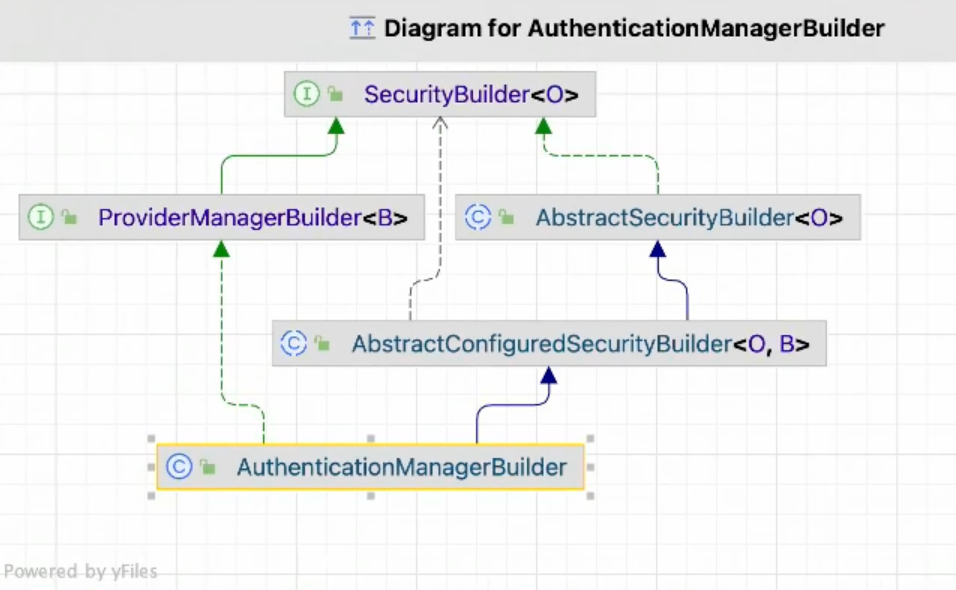
public class AuthenticationManagerBuilder
       extends AbstractConfiguredSecurityBuilder<AuthenticationManager, AuthenticationManagerBuilder>
       implements ProviderManagerBuilder<AuthenticationManagerBuilder> {

    private final Log logger = LogFactory.getLog(getClass());

    private AuthenticationManager parentAuthenticationManager;

    private List<AuthenticationProvider> authenticationProviders = new ArrayList<>();

    private UserDetailsService defaultUserDetailsService;

    private Boolean eraseCredentials;

    private AuthenticationEventPublisher eventPublisher;

	......
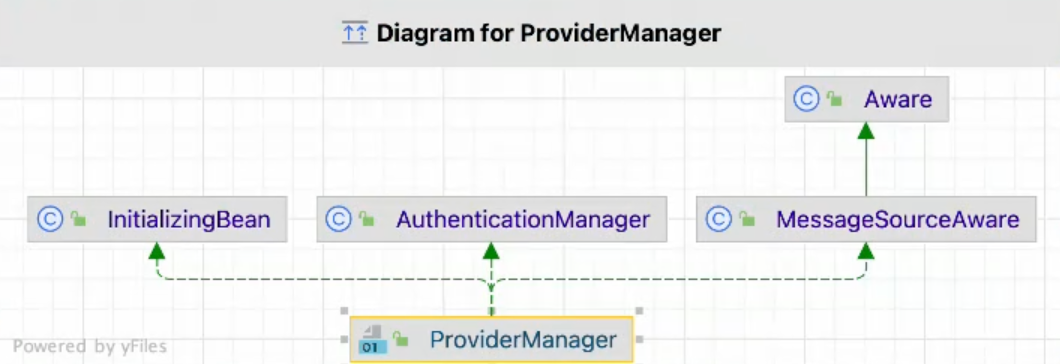
public class ProviderManager implements AuthenticationManager, MessageSourceAware, InitializingBean {

    private static final Log logger = LogFactory.getLog(ProviderManager.class);

    private AuthenticationEventPublisher eventPublisher = new NullEventPublisher();

    private List<AuthenticationProvider> providers = Collections.emptyList();  1️⃣

    protected MessageSourceAccessor messages = SpringSecurityMessageSource.getAccessor();

    private AuthenticationManager parent;  1️⃣

    private boolean eraseCredentialsAfterAuthentication = true;


	......

	@Override
	public Authentication authenticate(Authentication authentication) throws AuthenticationException {
	    Class<? extends Authentication> toTest = authentication.getClass(); //测试authentication是否支持
	    AuthenticationException lastException = null;
	    AuthenticationException parentException = null;
	    Authentication result = null;
	    Authentication parentResult = null;
	    int currentPosition = 0;
	    int size = this.providers.size();
	    //逐个provider去调用toTest方法
	    for (AuthenticationProvider provider : getProviders()) {
	       if (!provider.supports(toTest)) {
	          continue;
	       }
	       //如果支持,继续认证
	       if (logger.isTraceEnabled()) {
	          logger.trace(LogMessage.format("Authenticating request with %s (%d/%d)",
	                provider.getClass().getSimpleName(), ++currentPosition, size));
	       }
	       try {
	          result = provider.authenticate(authentication);
	          if (result != null) {
	             copyDetails(authentication, result);  //将authentication通过copyDetails赋值给result
	             break;
	          }
	       }
	       catch (AccountStatusException | InternalAuthenticationServiceException ex) {
	          prepareException(ex, authentication);
	          // SEC-546: Avoid polling additional providers if auth failure is due to
	          // invalid account status          throw ex;
	       }
	       catch (AuthenticationException ex) {
	          lastException = ex;
	       }
	    }
	    //for循环中的provider都不支持,result == null
	    if (result == null && this.parent != null) {
	       // Allow the parent to try.
	       try {
	          parentResult = this.parent.authenticate(authentication);  //2️⃣调用parent的authenticate,测试parent的provider是否支持
	          result = parentResult;
	       }
	       catch (ProviderNotFoundException ex) {
	          // ignore as we will throw below if no other exception occurred prior to
	          // calling parent and the parent          // may throw ProviderNotFound even though a provider in the child already          // handled the request       }
	       catch (AuthenticationException ex) {
	          parentException = ex;
	          lastException = ex;
	       }
	    }
	    if (result != null) {
	       if (this.eraseCredentialsAfterAuthentication && (result instanceof CredentialsContainer)) {  //是否擦除凭证信息。登录成功在内存擦出凭证信息,保护隐私
	          // Authentication is complete. Remove credentials and other secret data
	          // from authentication          ((CredentialsContainer) result).eraseCredentials();
	       }
	       // If the parent AuthenticationManager was attempted and successful then it
	       // will publish an AuthenticationSuccessEvent
	       // This check prevents a duplicate AuthenticationSuccessEvent if the parent
	       // AuthenticationManager already published it
	       if (3️⃣parentResult == null) {
	          this.eventPublisher.publishAuthenticationSuccess(result);
	       }

	       return result;
	    }

	    // Parent was null, or didn't authenticate (or throw an exception).
	    //没有一个provicer可以支持认证
	    if (lastException == null) {
	       lastException = new ProviderNotFoundException(this.messages.getMessage("ProviderManager.providerNotFound",
	             new Object[] { toTest.getName() }, "No AuthenticationProvider found for {0}"));
	    }
	    // If the parent AuthenticationManager was attempted and failed then it will
	    // publish an AbstractAuthenticationFailureEvent    // This check prevents a duplicate AbstractAuthenticationFailureEvent if the    // parent AuthenticationManager already published it    if (parentException == null) {
	       prepareException(lastException, authentication);
	    }
	    throw lastException;
	}
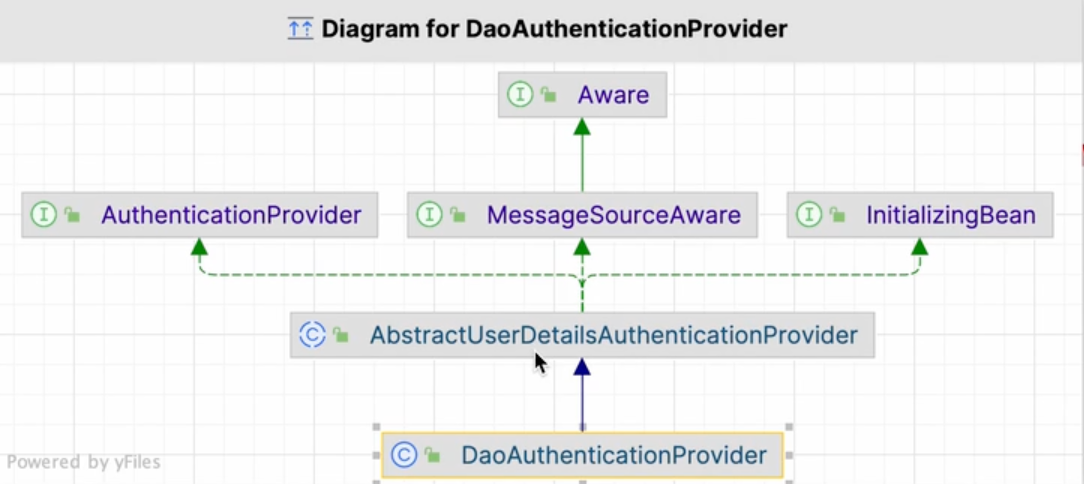
A base AuthenticationProvider that allows subclasses to override and work with UserDetails objects. The class is designed to respond to UsernamePasswordAuthenticationToken authentication requests.
private UserDetailsChecker preAuthenticationChecks = new DefaultPreAuthenticationChecks();

private UserDetailsChecker postAuthenticationChecks = new DefaultPostAuthenticationChecks();
UserDetailsChecker
public interface UserDetailsChecker {
	void check(UserDetails toCheck);
}
DefaultPreAuthenticationChecks
private class DefaultPreAuthenticationChecks implements UserDetailsChecker {

    @Override
    public void check(UserDetails user) {
       if (!user.isAccountNonLocked()) {
          AbstractUserDetailsAuthenticationProvider.this.logger
             .debug("Failed to authenticate since user account is locked");
          throw new LockedException(AbstractUserDetailsAuthenticationProvider.this.messages
             .getMessage("AbstractUserDetailsAuthenticationProvider.locked", "User account is locked"));
       }
       if (!user.isEnabled()) {
          AbstractUserDetailsAuthenticationProvider.this.logger
             .debug("Failed to authenticate since user account is disabled");
          throw new DisabledException(AbstractUserDetailsAuthenticationProvider.this.messages
             .getMessage("AbstractUserDetailsAuthenticationProvider.disabled", "User is disabled"));
       }
       if (!user.isAccountNonExpired()) {
          AbstractUserDetailsAuthenticationProvider.this.logger
             .debug("Failed to authenticate since user account has expired");
          throw new AccountExpiredException(AbstractUserDetailsAuthenticationProvider.this.messages
             .getMessage("AbstractUserDetailsAuthenticationProvider.expired", "User account has expired"));
       }
    }

}
DefaultPostAuthenticationChecks
private class DefaultPostAuthenticationChecks implements UserDetailsChecker {

    @Override
    public void check(UserDetails user) {
       if (!user.isCredentialsNonExpired()) {  //凭证是否过期
          AbstractUserDetailsAuthenticationProvider.this.logger
             .debug("Failed to authenticate since user account credentials have expired");
          throw new CredentialsExpiredException(AbstractUserDetailsAuthenticationProvider.this.messages
             .getMessage("AbstractUserDetailsAuthenticationProvider.credentialsExpired",
                   "User credentials have expired"));
       }
    }

}
@Override
@SuppressWarnings("deprecation")
protected void additionalAuthenticationChecks(UserDetails userDetails,
       UsernamePasswordAuthenticationToken authentication) throws AuthenticationException {
    if (authentication.getCredentials() == null) {  //判断是否存在凭证
       this.logger.debug("Failed to authenticate since no credentials provided");
       throw new BadCredentialsException(this.messages
          .getMessage("AbstractUserDetailsAuthenticationProvider.badCredentials", "Bad credentials"));
    }
    //得到用户前端输入的未加密的raw密码
    String presentedPassword = authentication.getCredentials().toString();
    //进行用户密码校验
    if (!this.passwordEncoder.matches(presentedPassword, userDetails.getPassword())) {
       this.logger.debug("Failed to authenticate since password does not match stored value");
       throw new BadCredentialsException(this.messages
          .getMessage("AbstractUserDetailsAuthenticationProvider.badCredentials", "Bad credentials"));
    }
}
@Override
public HttpSecurity addFilter(Filter filter) {
    Integer order = this.filterOrders.getOrder(filter.getClass());
    if (order == null) {
       throw new IllegalArgumentException("The Filter class " + filter.getClass().getName()
             + " does not have a registered order and cannot be added without a specified order. Consider using addFilterBefore or addFilterAfter instead.");
    }
    this.filters.add(new OrderedFilter(filter, order));
    return this;
}
匿名登录
登录成功后,默认的用户名和密码由SecurityProperties类中的User类中的属性确定
private String name = "user";
private String password = UUID.randomUUID().toString();
默认情况下会执行UserDetailsServiceAutoConfiguration类中的:
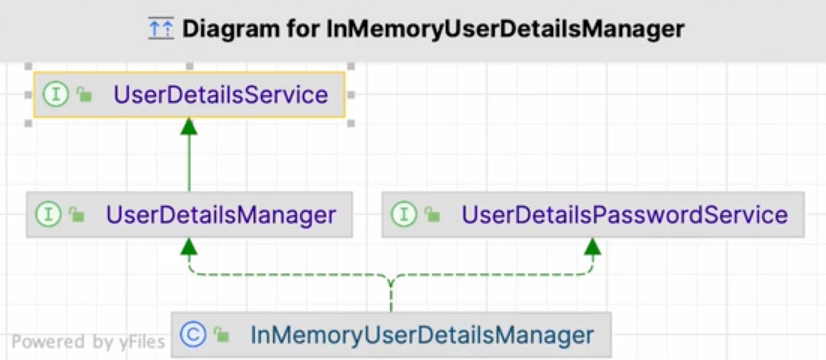
inMemoryUserDetailsManager方法
@Bean
public InMemoryUserDetailsManager inMemoryUserDetailsManager(SecurityProperties properties, ObjectProvider<PasswordEncoder> passwordEncoder) {
    SecurityProperties.User user = properties.getUser();
    List<String> roles = user.getRoles();
    return new InMemoryUserDetailsManager(new UserDetails[]{User.withUsername(user.getName()).password(this.getOrDeducePassword(user, (PasswordEncoder)passwordEncoder.getIfAvailable())).roles(StringUtils.toStringArray(roles)).build()});
}
InMemoryUserDetailsManager类
getOrDeducePassword方法
private String getOrDeducePassword(SecurityProperties.User user, PasswordEncoder encoder) {
    String password = user.getPassword();
    if (user.isPasswordGenerated()) {
        logger.warn(String.format("%n%nUsing generated security password: %s%n%nThis generated password is for development use only. Your security configuration must be updated before running your application in production.%n", user.getPassword()));
    }

    return encoder == null && !PASSWORD_ALGORITHM_PATTERN.matcher(password).matches() ? "{noop}" + password : password;
}